The eerie parallels between two deadly avalanches in Tahoe four decades apart
‘It’s horrible to see’

FILE: Snow blankets the face of Castle Peak in California. On Feb. 17, 2026, a deadly avalanche struck on a north-facing slope near Perry Peak above Frog Lake and just east of Castle Peak in the central Sierra Nevada.
Ryan Salm/For SFGATE
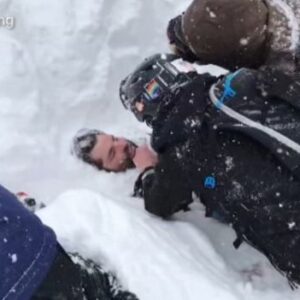
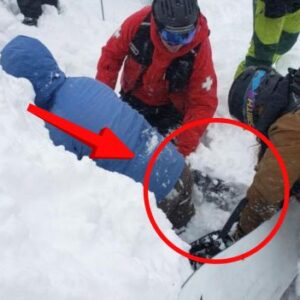
Little is known about how a group of 15 backcountry skiers and guides came to be engulfed by an avalanche near Castle Peak in Tahoe’s backcountry, leaving six survivors. What is starting to become clear are the conditions that led to the tragedy.


But there is also a historic precedent for the events that unfolded this week: the avalanche at Alpine Meadows 44 years ago that left seven dead. The massive slides are eerily similar, especially when it comes to the weather conditions leading up to the avalanches.
In the spring of 1982, Lake Tahoe was wrapping what was then considered a somewhat ordinary to disappointing winter season.
But in late March, that all changed in a hurry. A cold and wet weekend storm system had rushed through the north shore of Lake Tahoe and dropped several feet of fresh snow in mere days, shifting the landscape to a mountain of white, as well as the narrative of a region suddenly having to dig out.
And it wasn’t just the snowfall that was remarkable, but the extreme weather conditions that accompanied it: “Intense snowfall, accompanied by high winds, caused high avalanche hazard in the ski area and along the ski area and along the access road by Monday morning,” an October 1982 article in “The Avalanche Review” would later describe. “On Monday, Tuesday, and Wednesday the snowfall intensity occasionally reached five and eight centimeters per hour while the wind ranged near 100 mph and gusted to 120 at times.”
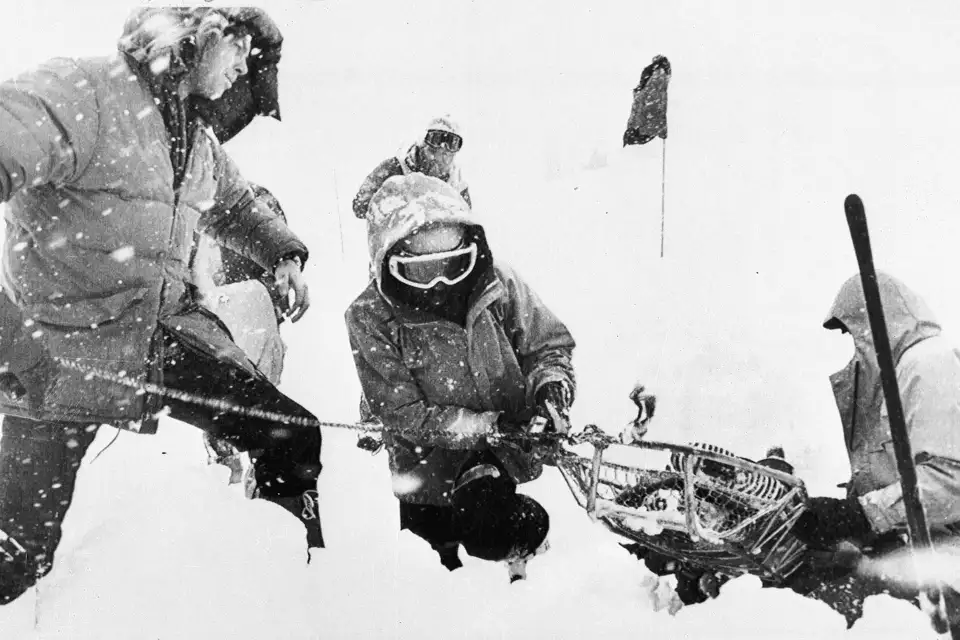
Rescue workers recover a body buried in the parking lot of the Alpine Meadows ski resort in Alpine Meadows, Calif., on April 2, 1982, after an avalanche killed seven people.
Dick Gilmore/AP
By March 31, day three of the storm, the cold slab of snow had finally reached its breaking point: “The avalanche, more than 4.5m deep and over 900m wide slipped from its anchorages 200m above the valley floor and the base area Alpine Meadows Ski Resort. Seconds later, seven people were dead,” the article said.
Similarly, this past week’s storm that resulted in the Castle Peak avalanche came on the heels of a historically dry January. The snow totals of the last week are also massive and historic: “The #snow has stopped but not before giving us another 18.5” (47 cm) in the last day. That brings our 5-day total to 111” (281.5 cm), the third snowiest 5-day period on record at the lab*,” a social media post from the UC Berkeley Central Sierra Snow Lab said on Friday.
Along with the prolific snowfall, the weather conditions also set up the region for avalanche risk, experts said. “The sheer snowfall rates of several inches per hour, the cold temperatures, high winds, light and fluffy snow, all mixed together, making whiteout conditions, easily the most hazardous storm system and week of snowfall that I’ve seen in three years,” Andrew Schwartz, the director of the Central Sierra Snow Lab near the Donner Summit, told SFGATE this week.
On Tuesday, the day the Castle Peak avalanche occurred, Schwartz said the storm brought unrelenting winds and cold temperatures, creating the same type of whiteout, avalanche-friendly conditions that were described during the day of the Alpine Meadows avalanche.
That the two storms came through similarly is no coincidence, Alpine Meadows resident Steven Siig said. He helped make “Buried,” a documentary about the 1982 avalanche; last March, Martin Scorsese optioned it for a feature.
Siig said he feels the 1982 avalanche and the Castle Peak slide are part of the same, ongoing narrative in more ways than one. “I think ’82 was, like, very symbolic of changes that were happening or starting to happen, and it’s been deteriorating into this more extreme, more common extremes,” Siig said, referring to the effects of climate change on the region and the emergence of massive swings in weather — from dry and no snow to extreme amounts of snow and wind.
“You know, we see this frequency: We won’t have snow for weeks and weeks and weeks and weeks, and, bam, we get it,” he continued. “That’s what happened in ’82 — the same scenario.”
While the technology around mitigating copious snowstorms for safety, both in-bounds at resort areas and in the backcountry, has changed dramatically, there is still a very human-sized margin of error in the mountains when risky conditions present themselves, Siig admitted.
He said that studying the past is helpful for making sense of what is happening today. “We’ve been asked, ‘Why the f—k are you making this movie?’ It’s like we have to make this movie because we have to be reminded of these scenarios so we make better decisions,” Siig said. “We’re all going to learn as a society some big lessons because of what happened at Castle Peak.”

FILE: The parking area of the Alpine Base Area at Palisades Tahoe during a winter storm in Alpine Meadows, Calif., on Feb. 24, 2023.
John Locher/AP
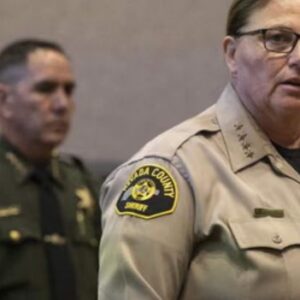
The precedent set by the Alpine Meadows is still remembered today. “The Placer County Sheriff’s office has dealt with a severe avalanche tragedy and the avalanche at Alpine Meadows, which I believe we had seven fatalities, that was extremely taxing on our organization and the community at the time,” Placer County Sheriff Wayne Woo said during a press conference on the Castle Peak avalanche on Wednesday. “So to see this tragic incident unfold and potentially have that many losses of life, you know, it’s horrible to see. And I think that’s why we’re all so committed to seeing this through until the end. … Unfortunately, we’re kind of at the will of Mother Nature at this point, and we’re gonna have to wait for hopefully a decent break in the weather and make sure we get every last soul off that mountain.”
And so, it becomes just what sheriff Woo said: a wait for a break in the weather. A wait to be able to safely access the avalanche footprint. A wait for the recovery of a ninth victim of the slide. A wait to study, analyze and come up with some kind of answer as to why things happened the way they did.

A member of the U.S. Army and a member of the California Highway Patrol speak on the runway at the Truckee Tahoe Airport as recovery efforts for a group of missing skiers continue in Truckee, Calif., Saturday, Feb. 21, 2026.
Godofredo A. Vásquez/AP
Whether people are still looking at the Alpine Meadows avalanche of 1982 or beginning to parse through the events of this week, it’s a wait, filmmaker Siig pointed out, that might never be over.
“What happens when things go south and how we deal with the PTSD of that and how we show a community that comes together in the face of tragedy, these are the important lessons that get through to people on a higher level,” he concluded. “We need to tell these stories with the situation we have at Castle Peak.”
Mountain towns editor Julie Brown Davis contributed to this story.
SOURCE: sfgate.com